PS Analytical
SELENIUM SPECIATION
PSAASELENIUMSPECIATION
Each
- Product overview
SELENIUM SPECIATION
Selenium can be presented in both inorganic (selenite, selenate, hydrogen selenide etc) and organic forms (selenomethionine, selenocysteine and selenoproteins etc). Among them, hydrogen selenide is extremely toxic while selenomethionine is essential and nutritional to the human body. The forms and the concentrations of selenium define its role in the environment and in the living systems.
The field of selenium speciation has been receiving increasing attention over the past decades. Research and routine analysis of selenium is undertaken in plants, soils, nutritional supplements, and biological samples (urine etc.) in many environmental institutions and agencies.
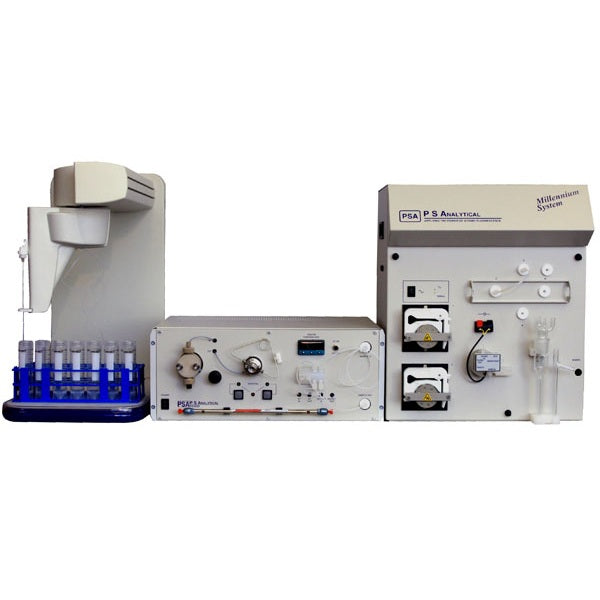
As well as it''s own 10.820 Modular Interface, P S Analytical can offer both Agilent and Dionex options for the separation of selenium species using the PSA 10.055 Millennium Excalibur as the detector.
PSA 10.820 MODULAR INTERFACE COUPLED WITH THE 10.055 MILLENNIUM EXCALIBUR FOR THE SPECIATION OF SELENIUM
Using a reverse phase column with a modifier of DDAB, five selenium species (selenocystine, selenomethionine, selenoethionine, selenite and selenate) can be generated in under 10 minutes. The inclusion of the UV system aids in the conversion of the species into hydride forming species thus allowing lower limits of detection to be achieved.
The MI extends the capability of P S Analytical''s Millennium Merlin and Excalibur Atomic Fluorescence Spectrometers and is available in a number of configurations.
The MI 10.820-1000 includes:
• an integrated HPLC pump
• a 6 port injection valve
• online UV digestion
• heating and cooling
With a simple interface, and compatible flow rates, the accessory facilitates speciation studies (Hg, As, Se, Sb, Bi etc), online digestion (heat and UV), as well as a variety of post column reactions. The conjunction of the AFS systems with the MI provides ultimate detection performance for both sensitivity and selectivity.
In addition to the impressive detection performance, the automated approach significantly speeds up analysis times, reduces and sample pre-treatment and handling errors.
All of these systems provide arsenic speciation for labs that need an easy-to-learn and easy-to-use system, which can be automated and/or extended as the labs needs grow.